We arrived in Brazil today, everything went rather smoothly. There were a few hangups with the apartment, but everything is manageable and we think we are prepared to have a very successful trip.
My paper is going to focus on the role that rankings, the vestibular and prestige play in the equal access to education in Brazil’s colleges and universities, both public and private. Prestige and rankings take on different forms and meanings in Brazil and are not directly correlated to their US counterparts, however, figuring out the similarities and how they coincide similarly to access will nonetheless further our understanding of affirmative action and access. I am coming from the position of trying to mold what prestige and rankings mean here in the United States. My ultimate goal would be to incorporate diversity into the language of what is considered prestigious here in the United States, so that colleges and universities that hope to be successful and prestigious will have no choice but to take the diversity of their student population into consideration when dealing with admissions policy.
On a more personal note, Brazil is as beautiful as advertised. The people are all extremely helpful, kind and patient with us, even though none of us speak Portuguese. The natural landscape surrounding Rio is stunningly gorgeous. At one point today we were walking down a street and emerged at a marina with dozens of colorful boats in front of us, a picturesque alley to our right, and off in the distance past the boats was the giant Christo statue on top of a hill that was peaking through a low marine layer of clouds. It was all very majestic. We all stopped and stared with our mouths open until the tourist inside of us reached for our cameras to document the experience. Hopefully some of these pictures will be up soon so that you all can more closely share in our experiences.
Sunday, March 16, 2008

Saturday, March 15, 2008
The Journey Begins
In a few hours, we will congregate at LAX, trudge through security, and wait for our flight to
Friday, April 13, 2007
Too White too Fight? Reflections From a Brazilian Activist
Posted on Behalf of Camila: our esteemed colleague and treasured friend, without whom GAAPP could not have happened.
Since the very beginning of the idea of GAAPP project I was pretty sure I could help the students with the organization and realization of the Brazil trip. Nonetheless, my participation in the project has been in the backstage, with administrative and networking issues. People who I contacted in Brazil to schedule meetings for the GAAPP group, such as activists,public employees, and University officials, did not know my face; they did not know my skin color; “I was not yet racialized.” “Some people may guess my skin color” (I would think), because of my strong Southern accent,because of the place I was born (Rio Grande do Sul), and because of the fact I was talking from the University of California Los Angeles, which indicated that I am part of the privileged group who went to college in Brazil. But they did not know for sure and very few dared to ask: Are you white?
I was happy with my temporary racial anonymity. I have been feeling too suspicious of my own condition, de-legitimized not only by my skin, but by my own history. I have had two good Black friends since I came to UCLA. I have lived in the whitest and, perhaps, more racist region of Brazil, I have enjoyed many benefits that the white upper-middle class Brazilian family customarily enjoys … At the same type, Bob Marley is my favorite singer, I sing “War” sound and loud, I love Capoeira, I participated in the World Social Forum twice… Yet: am I only the representation of the Brazilian white society that has used African popular culture to disguise their taste for privilege and avoid the real racial fight? I am in conflict; this conflict is welcome.
I have learned how to be critical and to overcome my fears. I repudiate the discourse that Brazilians are happy as they always have been, and that Black subordination is natural and better than a clear racially divided society.However, I had to understand the pillars of Brazilian constitutional democracy first to, then, become racially conscious. I first believed indignity and equality as inalienable rights, then, I examined the beneficiaries. It was not the racial problem that took me to the debate about legal remedies. It seems that the pathway for the Brazilian racial debate is inverted (and the myth of racial democracy can explain this to a certain extent.) The Black movement is not yet mature, despite of incredible progress. Meanwhile, progressive and racially conscious bills inundate state legislatures and the Brazilian Congress. For me, this inverse pathway (from remedies to movement) was really effective. But the question is whether it can be effective and resilient at the national level and, especially: can it be functional?
Whiteness in my skin and soul is ashamed of many situations that my friends experienced in Brazil because of historical and socially constructed racism.One could even argue that institutionally, racism was upheld up to recently in authoritarian and democratic periods. At the same time, my whiteness admires the many Africans (Brazilian, Americans…) who are not afraid of fighting and overcome so many barriers, and the few Whites who have rejected the idea of general happiness and harmony among races and believe that the fight is certainly worth the while.
The main argument against the fight for racial equality is that a racialized society is, generally, a society permeated with anger and resentment. Yep!This discourse has color. This discourse is constant in the mouth of my peers. This discourse represents that still the White folk sees the Blackfolk as less able to civilized- an idea that was clearly expressed by Gilberto Freyre in the celebrated book “Masters and Slaves”- and that all racial groups are happy and fine with it. Whites in Brazil do not think that the fight for racial equality is important enough to risk a divide and a revolutionary level of animosity in our so-called racially harmonic society.That is rationally obvious, and morally absurd. White man and women have, as I have, lived comfortably in their gated houses and waited for a Black hand to cook their meals and clean their bathrooms. While the moral absurdity of this historical relation is not consolidated in most of the white minds in Brazil, why should we, the racially conscious, care for resentment and racial divisions? If it happens, I hope I can overcome my skin color and all the rooted lessons and privileges that have come with it and, finally, leave the backstage.
I had to come to the U.S. to better understand the racial challenges in Brazil; I believe Brazil helped my friends to better understand the American racial questions as well.
Since the very beginning of the idea of GAAPP project I was pretty sure I could help the students with the organization and realization of the Brazil trip. Nonetheless, my participation in the project has been in the backstage, with administrative and networking issues. People who I contacted in Brazil to schedule meetings for the GAAPP group, such as activists,public employees, and University officials, did not know my face; they did not know my skin color; “I was not yet racialized.” “Some people may guess my skin color” (I would think), because of my strong Southern accent,because of the place I was born (Rio Grande do Sul), and because of the fact I was talking from the University of California Los Angeles, which indicated that I am part of the privileged group who went to college in Brazil. But they did not know for sure and very few dared to ask: Are you white?
I was happy with my temporary racial anonymity. I have been feeling too suspicious of my own condition, de-legitimized not only by my skin, but by my own history. I have had two good Black friends since I came to UCLA. I have lived in the whitest and, perhaps, more racist region of Brazil, I have enjoyed many benefits that the white upper-middle class Brazilian family customarily enjoys … At the same type, Bob Marley is my favorite singer, I sing “War” sound and loud, I love Capoeira, I participated in the World Social Forum twice… Yet: am I only the representation of the Brazilian white society that has used African popular culture to disguise their taste for privilege and avoid the real racial fight? I am in conflict; this conflict is welcome.
I have learned how to be critical and to overcome my fears. I repudiate the discourse that Brazilians are happy as they always have been, and that Black subordination is natural and better than a clear racially divided society.However, I had to understand the pillars of Brazilian constitutional democracy first to, then, become racially conscious. I first believed indignity and equality as inalienable rights, then, I examined the beneficiaries. It was not the racial problem that took me to the debate about legal remedies. It seems that the pathway for the Brazilian racial debate is inverted (and the myth of racial democracy can explain this to a certain extent.) The Black movement is not yet mature, despite of incredible progress. Meanwhile, progressive and racially conscious bills inundate state legislatures and the Brazilian Congress. For me, this inverse pathway (from remedies to movement) was really effective. But the question is whether it can be effective and resilient at the national level and, especially: can it be functional?
Whiteness in my skin and soul is ashamed of many situations that my friends experienced in Brazil because of historical and socially constructed racism.One could even argue that institutionally, racism was upheld up to recently in authoritarian and democratic periods. At the same time, my whiteness admires the many Africans (Brazilian, Americans…) who are not afraid of fighting and overcome so many barriers, and the few Whites who have rejected the idea of general happiness and harmony among races and believe that the fight is certainly worth the while.
The main argument against the fight for racial equality is that a racialized society is, generally, a society permeated with anger and resentment. Yep!This discourse has color. This discourse is constant in the mouth of my peers. This discourse represents that still the White folk sees the Blackfolk as less able to civilized- an idea that was clearly expressed by Gilberto Freyre in the celebrated book “Masters and Slaves”- and that all racial groups are happy and fine with it. Whites in Brazil do not think that the fight for racial equality is important enough to risk a divide and a revolutionary level of animosity in our so-called racially harmonic society.That is rationally obvious, and morally absurd. White man and women have, as I have, lived comfortably in their gated houses and waited for a Black hand to cook their meals and clean their bathrooms. While the moral absurdity of this historical relation is not consolidated in most of the white minds in Brazil, why should we, the racially conscious, care for resentment and racial divisions? If it happens, I hope I can overcome my skin color and all the rooted lessons and privileges that have come with it and, finally, leave the backstage.
I had to come to the U.S. to better understand the racial challenges in Brazil; I believe Brazil helped my friends to better understand the American racial questions as well.
Monday, April 2, 2007
I do not want to be an object of study
One of the major themes that has been controversial in our trip has been the issue of knowledge production in Brazil and on Brazil. This issue took center stage when we met with Edna Roland who went from being the leader of a non government organization dedicated to black women’s rights to being the President of the World Conference in 2001 based partially on the fact that she had published a paper on some the issues addressed at the world conference. This issue came up again with Hedio Silva who is head of CEERT (Research Center on Labor Relations and Inequalities) who uses his research on racial discrimination as evidence against the government to prove that racism is persuasive in Brazil. He argued that knowledge production has two positive effects. First it helps with litigation and second it can change the minds, opinions and argument of government leaders who guide legislation. Knowledge production is also very political in Brazil. Many activists in Brazil feel exploited as “objects of study” as opposed to researchers and academics themselves. At PUC- Sao Paulo some students were adamant about the fact that they researched the US and would like to travel to do field research in the states. Still other activists argued that researcher come to Brazil, take their concepts publish them and gain money and notoriety without acknowledging the activists or sharing some the resources.
We meet with students at the Global Palmares Institute and they added a layer to this discourse that I had not properly accounted for. TheY questioned just how effective the written word could be in mobilizing, organizing and identity formation in a county were the majority of people are functionally illiterate. They questioned who the audience of this knowledge production is and whether that audience is different from the masses of black Brazilian who are necessary to utilize in the struggle for racial equity. They feared that this move toward knowledge production could create an industry of academics without addressing the needs of most Brazilians.
Considering both sides of the argument I think it is important to have a strong community of scholars dedicated to community activism and that mass literacy should be the first item on agenda.
We meet with students at the Global Palmares Institute and they added a layer to this discourse that I had not properly accounted for. TheY questioned just how effective the written word could be in mobilizing, organizing and identity formation in a county were the majority of people are functionally illiterate. They questioned who the audience of this knowledge production is and whether that audience is different from the masses of black Brazilian who are necessary to utilize in the struggle for racial equity. They feared that this move toward knowledge production could create an industry of academics without addressing the needs of most Brazilians.
Considering both sides of the argument I think it is important to have a strong community of scholars dedicated to community activism and that mass literacy should be the first item on agenda.
Riding Dirty?
Today for the first time in nearly 10 years I stared down the barrel of a gun. Being from Los Angeles, Ca and growing up in the 1980s and 1990s I have been robbed at gun point and even caught in the middle of shoot outs but this was a completely new experience because today the people with the guns were police officers and I was in Sao Paulo, Brazil. The story is simple enough I was with 2 members of my group in a taxi in route to one of our meetings. There were two black men in the backseat and a "branca" in the front seat with the taxi driver. The cops pulled beside us guns drawn and drove parallel two us for a block and a half with the gun pointed at us. There are at least two interesting points about this story. First, this is not the first time I have been harrassed by the police. But this felt less like police harrassment and more like street gang intimidation. The cops´ actions reminded me more of the local gangs in Los Angeles using the question "Where you from" as a pretense to kill you, than a cop using your race as a pretense to arrest, investigate or even physically abuse or murder you. Second, after relaying this story a few times I realized that to black Brazilians this is normal behavior by the police. I find it ironic and inconsistant that in a country that claims to be racially democratic and generally conflict resistant that it is a normal practice for police officers to point guns at black people for the crime of riding in the backseat of a taxi?
Police Racial Profiling from a Privileged Perspective
On our way to our first meeting today we were driving along in a taxi when I noticed a gun barrel pointing out of the vehicle next to me. I looked at the people in the car then looked away because I didn't want them to think I was doing anything suspicious. Next, the police decided to slow down and continue looking into our car. I wasn't too scared because I knew that once they saw that I was not a suspect, they would drive off. Yet, George and Na'Shaun who are Black were much more scared and nervous than I was. In my mind, I figured that the police thought that I had been kidnapped by 2 Black men so I tried to remain calm and not make them think I was calling for help. After driving next to us for about 2 blocks with a rifle pointed in our direction they finally drove away.
After that incident, George and Na'Shaun remained completely silent in the backseat. Although this incident was tense for me, I knew that I was considered white in Brazil and that I would be fine. Throughout the entire time that the gun was pointed at us, I was not as scared as George and Na'Shaun were. I was pretty sure that I would not end up killed by the police. George and Na'Shaun did not have the same racial privilege and the security that comes with it. This incident demonstrates the racial privilege that most white people take for granted in Brazil. Because white people take their privilege as naturally occurring they claim that they are living in a racial democracy. Unlike Black people, whites don't have to live extremely tense moments wondering if the police is going to kill them, so everything seems fine to them.
After that incident, George and Na'Shaun remained completely silent in the backseat. Although this incident was tense for me, I knew that I was considered white in Brazil and that I would be fine. Throughout the entire time that the gun was pointed at us, I was not as scared as George and Na'Shaun were. I was pretty sure that I would not end up killed by the police. George and Na'Shaun did not have the same racial privilege and the security that comes with it. This incident demonstrates the racial privilege that most white people take for granted in Brazil. Because white people take their privilege as naturally occurring they claim that they are living in a racial democracy. Unlike Black people, whites don't have to live extremely tense moments wondering if the police is going to kill them, so everything seems fine to them.
A military police officer wheels the body of a suspected drug dealer killed during a police operation in Rocinha, a favela in the south of Rio de Janeiro, April 2004.
© Genna Naccache

Sunday, April 1, 2007
Segregation in Rio?
At the end of my first week in Brazil, I have concluded racism exist in this country. I can honestly say from first hand experience that this country is not a melting pot of inclusion. As we boarded the bus to leave Rio De Janiero, I began to reflect on my week experience. The first thing that came to mind was the first meeting at PUC-Rio. The researcher presented information about the coverage of racial discrimination in the news media. And what I remember the most was that the police was the most covered. The police and security forces were either victim or offender. My initial thoughts when I heard this information was racial profiling just like the United States. But as I leave I realize there was a lot more than simple racial profiling. The newspaper research project revealed an apartheid system in Brazil. Everyday of my trip, the taxi drivers would slow down to drive by the police check point near on the way to our apartment. My first experience I thought I was just a normal police officer but it was more than that. In fact it was the military police at the base of the favella, a term used to describe a slum. The irony behind this is that popular story of Brazil, is that there was no “legal segregation of the races” however the military police post in Ipanema speaks to a different form of separation based on the same ideology. This ideology is based on white supremacy. While I have no empirical data that showcases the racial makeup of the favella and Ipanema, I can speak to my experience and the stories of other residents of Brazilian that showcase Ipanema as the white affluent area while the favella was black area. While many can attest the police present as way to preserve safety. However, the problem arises is that favellas are rampant across the city. In fact, I would say more people in Rio live in the favellas than small amount of people live in Ipanema and other similar areas. If the city was concerned about safety wouldn’t it be best to develop the favellas ? The military post serves as mechanism to patrol who enters whiteness(Ipanema)? The military post serves an example of how US and Brazil may have differences to perpetuate White Supremacy. In the US, Jim crow laws to mintain racial suboardination. On the other hand Brazil had no direct laws but used actions such as the police enforcement to showcase the law of the land.
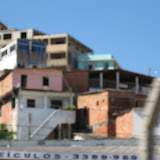 |
| Favelas |
Subscribe to:
Posts (Atom)


